It starts with the real task
MIG on clean 6mm plate at a bench is a different job to gouging galvanised steel in a tank. The process, material, coating, duration, access and who's nearby all change what you write.
Fabora resources
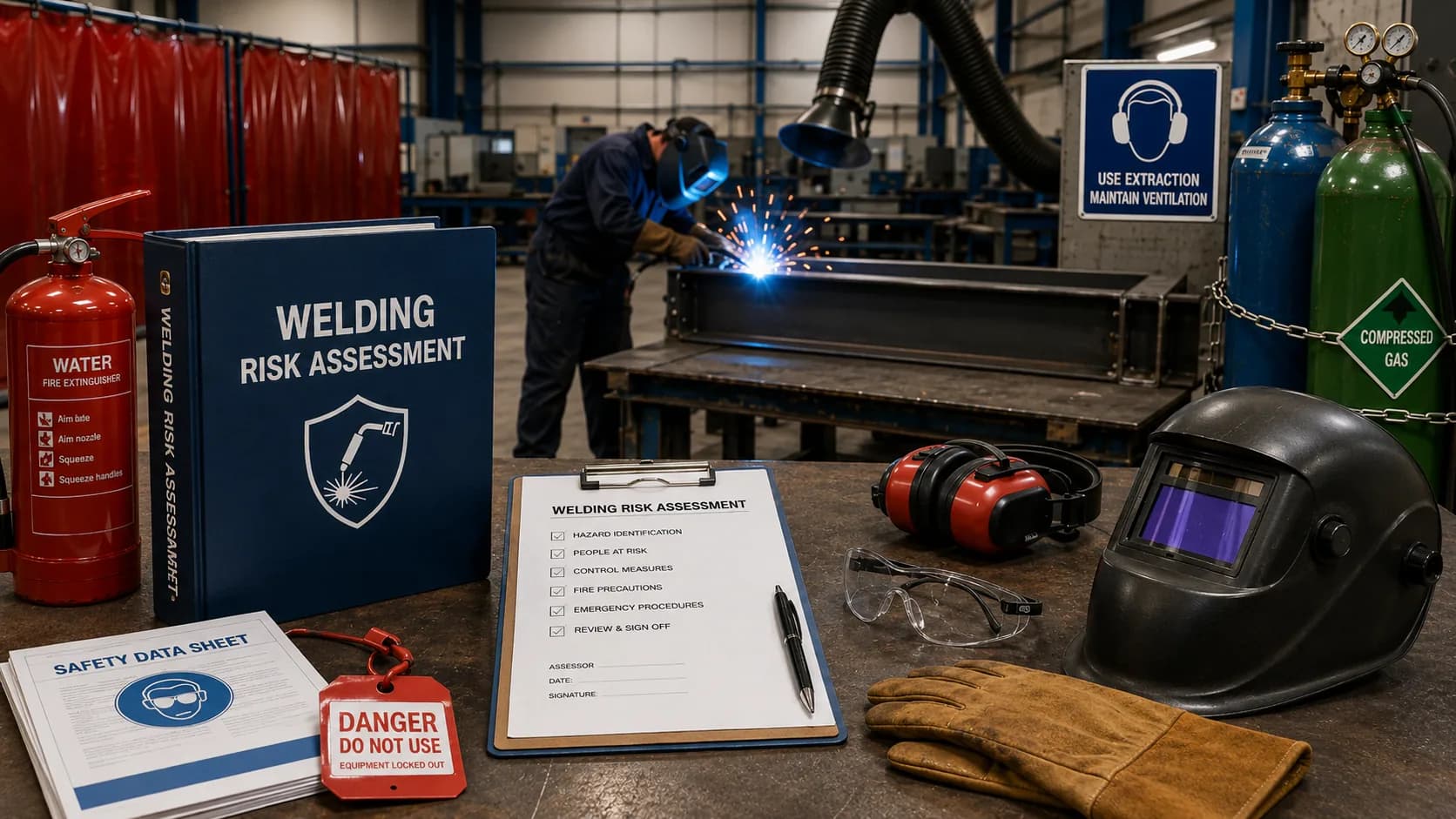
A welding risk assessment names the hazards, says who could get hurt, sets out the controls, and gets checked before anyone strikes an arc. In a fabrication shop or out on site, it has to match the real bay or work area, the kit, the material and the people around it. A form copied from the last job and left untouched isn't that.
Short answer
A template gives you the bones: the usual hazards and controls. The job is to make it fit: this material, this work area, this kit, these people, these site rules. Do that before it goes out, not after.
Practical summary
A template gives you the bones: the usual hazards and controls. The job is to make it fit: this material, this work area, this kit, these people, these site rules. Do that before it goes out, not after.
Free download
Editable and free, with no signup. Fill it in for your job, then keep it for the next one.
Stop re-typing it every job
The template is a good start. Fabora RAMS turns it into reusable, editable RAMS you build in minutes, with saved hazard, COSHH and PPE libraries, branded PDF export and revisions, instead of editing the same Word file every time.
Plain English answer
It's the document that names the hazards in a welding job, says who could be harmed, and lists the controls that need to be in place before work starts.
MIG on clean 6mm plate at a bench is a different job to gouging galvanised steel in a tank. The process, material, coating, duration, access and who's nearby all change what you write.
Not just the welder. The labourer holding the steel, the next bay along, other trades, the client walking through, the public on the far side of a hoarding: anyone the fume, sparks or UV can reach.
A supervisor should be able to read it and know what's expected: the PPE, the fume control, the fire precautions, the equipment checks, the exclusion zone, and when to stop.
The risk assessment usually sits inside the RAMS pack, next to the method statement that spells out the working sequence.
Hazards
Most welding jobs share the same handful of hazards. The template should prompt them, but no two jobs are identical, so don't treat the list as the whole assessment.
Mild steel fume is a known carcinogen (HSE STSU1-2019), so this isn't optional. Think process, material, coatings, duration, extraction or ventilation, RPE, and who's stood downwind. Galvanising, paint and primers make it worse.
Sparks travel further than people expect, up to ten metres, and they drop through gaps onto whatever's below. Check combustibles, hidden voids, the gap under the floor, and do a proper end-of-job check before you leave.
Hot steel and spatter cause most burns; arc eye usually catches the person who glanced over from the next bay. Screens protect them as much as the welder.
Damaged leads, dodgy return clamps, wet conditions and generators on the electrical side. On the gas side: securing cylinders, checking hoses and regulators, flashback arrestors, and keeping oxy and fuel apart.
The bit either side of welding adds its own list (abrasive wheels, flying particles, noise, hand-arm vibration and dust) and often needs different PPE to the welding itself.
Frames, plates, gates and secondary steel are heavy, sharp and awkward to move. And other trades, workshop staff or the public nearby may need screens, exclusion zones, signs or timing controls.
Controls
Controls only count if they're specific and tied to the work area. "Use PPE" tells nobody anything. "Shade 11 lens, FR jacket, screens up before the arc strikes" does.
Who's welding, whether they're coded or trained for it, who's supervising, who briefs the team, and who has the authority to stop the job when something changes.
Welding mask with the right shade, gauntlets, FR clothing, safety boots, ear defenders for the grinding, and RPE where the fume control on its own won't cut it.
LEV at source where you can, general ventilation, weld position, and RPE to back it up. Then sanity-check it actually matches the material: galvanised or painted steel needs more than clean mild steel.
Permit if the site runs one, combustibles cleared or covered, extinguisher and fire blanket to hand, and a fire watch that stays after the welding stops. Smouldering fires often start an hour later.
Eyeball the welding set, leads, return clamp, plugs, grinders, hoses, regulators, cylinders and cable routes before you start. Damaged leads come out of use, not back in the van.
Exclusion zone, screens, signs, decent housekeeping, first aid, the site fire arrangements, and a clear line on what makes everyone down tools.
Template checklist
Six headings to fill in before the document goes out. It still needs a competent person to edit it for the job and sign it off.
Company, job reference, customer, the bay or site area, scope, dates, review date, revision number and who approved it. Get the dates and contacts right. Stale ones are the giveaway that it was copied.
Welding or hot work type, who's doing it, who's at risk, supervision, competence, nearby trades, public exposure and the site contact.
Steel and its condition, coatings, consumables, gases, the welding set, grinders and cutting tools, plus the COSHH items and the safety data sheets behind them.
Fume controls, extraction, ventilation, RPE, permit needs, fire risk, extinguishers, fire watch and the end-of-job check.
Welding PPE, RPE, ear protection, screens, access equipment, work at height, awkward positions, manual handling and exclusion zones.
Emergency arrangements, stop-work triggers, first aid, fire response, incident reporting, permit close-out, the approval route and the revision history.
Workshop example
A worked example of how a shop weld gets reviewed start to finish. It's a guide to the order, not a finished assessment for your job.
Bench or booth, screens, extraction point, access route, who's nearby, housekeeping. Sort the combustibles before the leads come out.
Steel condition, coatings, contamination, wire or rods, gas, sprays and cleaners, plus the COSHH info behind anything that needs it.
Welding set, return lead, cables, plugs, gas, extraction, RPE and PPE. Anything damaged comes out of use.
LEV, ventilation, RPE and weld position suit the material and how long the run is. Galvanised or painted steel needs more.
PPE, fume control, fire precautions and supervision as set out. Manage hot offcuts, spent consumables and sparks as you go.
Inspect the weld and the area, then record damaged kit, fume concerns, missing PPE or anything to fix before the next job.
Site example
Site welding needs more thought job-to-job: permits, ventilation, access and other trades change every time you turn up somewhere new.
Site access, welfare, emergency arrangements, the site contact, local rules, and any restriction that bites on the welding.
Exact work area, hot works permit route and timing, nearby materials and services, access and escape routes.
Brief the RAMS, check the permit conditions, and make sure the risk assessment still matches the live location, not the one you imagined in the office.
Agreed access route, cylinders secured, manual handling managed, walkways and escape routes kept clear.
Screens, signs, barriers, extinguisher, fire blanket, fume control and ventilation in place. Recheck height, platform and combustibles for anything that's changed since the RAMS were written.
Work to the agreed controls, hold the fire watch for the agreed period, clear leads, cylinders, offcuts and screens, then log permit close-out, defects, photos and any follow-up before you leave.
RAMS connection
The risk assessment is the hazards and controls. The method statement is the sequence: how the work actually gets done. RAMS bring them together so the whole job reviews as one. Our method statement template for steelwork covers the sequence side, and the toolbox talk topics guide further down turns the key points into a short team briefing.
Fume, fire, burns, arc eye, electric shock, gases, grinding, manual handling, nearby people, PPE, COSHH and emergencies.
Arrive, set up, check permits, move kit, weld, fire-watch, clear up, record. The order the job runs in.
It should hook into the hot works permit, the COSHH info, the fume controls, the equipment checks and the PPE you've chosen.
On site, the weld doesn't sit alone: access, lifting, other trades and the public all feed into how it affects the install.
Fabora RAMS
It speeds up the drafting and keeps your content consistent. What it doesn't do is sign the job off. That stays with you.
Company info, customers, sites and contacts are held once, so a welding RAMS doesn't start life as last month's file with the names changed.
Pull welding hazards, fume controls, hot works precautions, PPE, COSHH and equipment from your libraries, then edit them around the job in front of you.
Export the reviewed pack as a PDF, send it to whoever needs it, and keep a cleaner revision trail as the job moves.
It gives you structure, speed and consistency. It doesn't replace a competent risk assessment, the client's rules, site acceptance or your approval.
Copied templates
A copied form can look complete and still miss the controls that matter. These are the ones that catch a weak template before it goes out.
Old site name, wrong dates, a contact who left, a supervisor who's on another job. If the header's wrong, nobody trusts the rest.
It lists "welding fume" and "fire" but never says what's being welded, where, how it's ventilated or who's nearby. That's a list, not an assessment.
Extraction, ventilation, RPE, the fume path and the material all matter. A generic "adequate ventilation" line on a galvanised job won't survive a second look.
Fire watch, extinguishers, combustibles, hidden voids, permit conditions and the end-of-job check get skipped when the template was written for a clean bench weld.
Different material, coating, location, duration, access or trades nearby: any of those should trigger a fresh look, not a reused PDF.
Pages of generic wording aren't the same as a usable control plan. The good ones make the real hazards, controls and who's responsible easy to find.
Official guidance
These links point to the underlying official material. This page is a practical summary, not a replacement for those sources, competent review, or legal advice.
Useful HSE context on welding fume, gases, noise, vibration and other health risks linked to welding.
Useful HSE context on fire, explosion, burns, electric shock, compressed gases and other welding safety risks.
Useful HSE guidance on welding risk assessment, fume control, ventilation, RPE and protecting nearby workers.
Useful HSE welding COSHH guidance for fumes, gases, cutting and related process-generated exposure.
FAQ
Short answers on practical use, review expectations, and where this guidance stops.
Important note
Final review, suitability, and approval still remain with the customer's business and the people responsible for the job.
It's the document that names the hazards in a welding job, says who could be harmed, and sets out the controls needed for that actual workshop or site task before work starts.
Usually fume and gases, fire, burns, arc eye and UV, electric shock, gas cylinders, grinding and cutting, noise, hand-arm vibration, manual handling, slips and trips, nearby people, PPE, COSHH and emergency arrangements. Pick the ones that apply to the job rather than listing all of them every time.
Competent welders and supervision, a task briefing, the right PPE, fume extraction or ventilation, RPE where it's needed, a hot works permit if the site runs one, extinguishers and a fire watch, equipment checks, screens, exclusion zones and clear emergency arrangements.
Yes. Welding fume is hazardous to health (HSE classes mild steel fume as a carcinogen), and jobs often involve gases, consumables, cleaners or sprays too. The COSHH review usually sits inside the wider welding risk assessment and RAMS pack.
No. The risk assessment covers the hazards, who's at risk and the controls. The method statement explains the sequence: how the welding actually gets done. RAMS bring the two together.
You can start from a company template, but it has to be edited for the job. Material, coating, process, ventilation, access, who's nearby, permits and kit all change, and a copied one that ignores that won't stand up.
Related reading
These links keep the topic moving, either into related guidance or into the Fabora RAMS product pages.
See how Fabora RAMS helps steelwork teams prepare editable welding RAMS and risk assessment content faster.
Compare the Fabora RAMS plans if you prepare welding RAMS, risk assessments and method statements regularly.
Useful if you need the broader RAMS structure around a welding risk assessment and method statement.
Useful if you need a practical welding or steelwork method statement sequence alongside the risk assessment.
Useful if you need practical briefing topics that connect welding hazards, controls, PPE, fumes and fire risk to the job.
Create a practical toolbox talk outline from welding hazards, controls, PPE, fumes and fire-risk briefing points.
Use the free checklist tool to review welding hazards, fumes, hot works, PPE, COSHH, equipment and job-specific controls before drafting RAMS.
Useful when welding risk assessment content needs to sit inside a wider RAMS pre-issue review before the pack goes out.
Useful if your welding risk assessment needs to sit inside a wider site welding RAMS pack.
Useful where welding risk assessment controls need to connect with permits, fire watch and close-out checks.
Useful where welding fumes, gases, consumables and COSHH items need clearer supporting review.
Useful background for fume control, extraction, ventilation and RPE decisions in fabrication workshops.
Useful if the welding process itself affects the hazards, fume controls, consumables or PPE selection.
Use the free Fabora tool when a hot works permit needs to sit alongside welding RAMS and risk assessment review.