Use it as a review starter
The tool creates a structured checklist from preset welding and steelwork prompts. It still needs review around the real job, material, people, equipment and site rules.
Free Fabora Tool
Create a practical welding risk assessment checklist for workshop welding, site welding, hot works, cutting, grinding and related steelwork tasks. Use it as a starting point, then review it around the real job, materials, equipment, fumes, fire risks, people and site rules.
A welding risk assessment checklist is a structured prompt list for reviewing welding hazards before work starts: fume and gases, fire and hot works, arc eye, electric shock, gas cylinders, PPE, COSHH and job-specific controls. This free tool generates one from preset steelwork prompts. Your business still reviews it against the real job and signs it off.
Free tool
Preset welding checks for real job review
Choose the work setting, process, material condition and control route to generate a practical welding risk assessment review checklist.
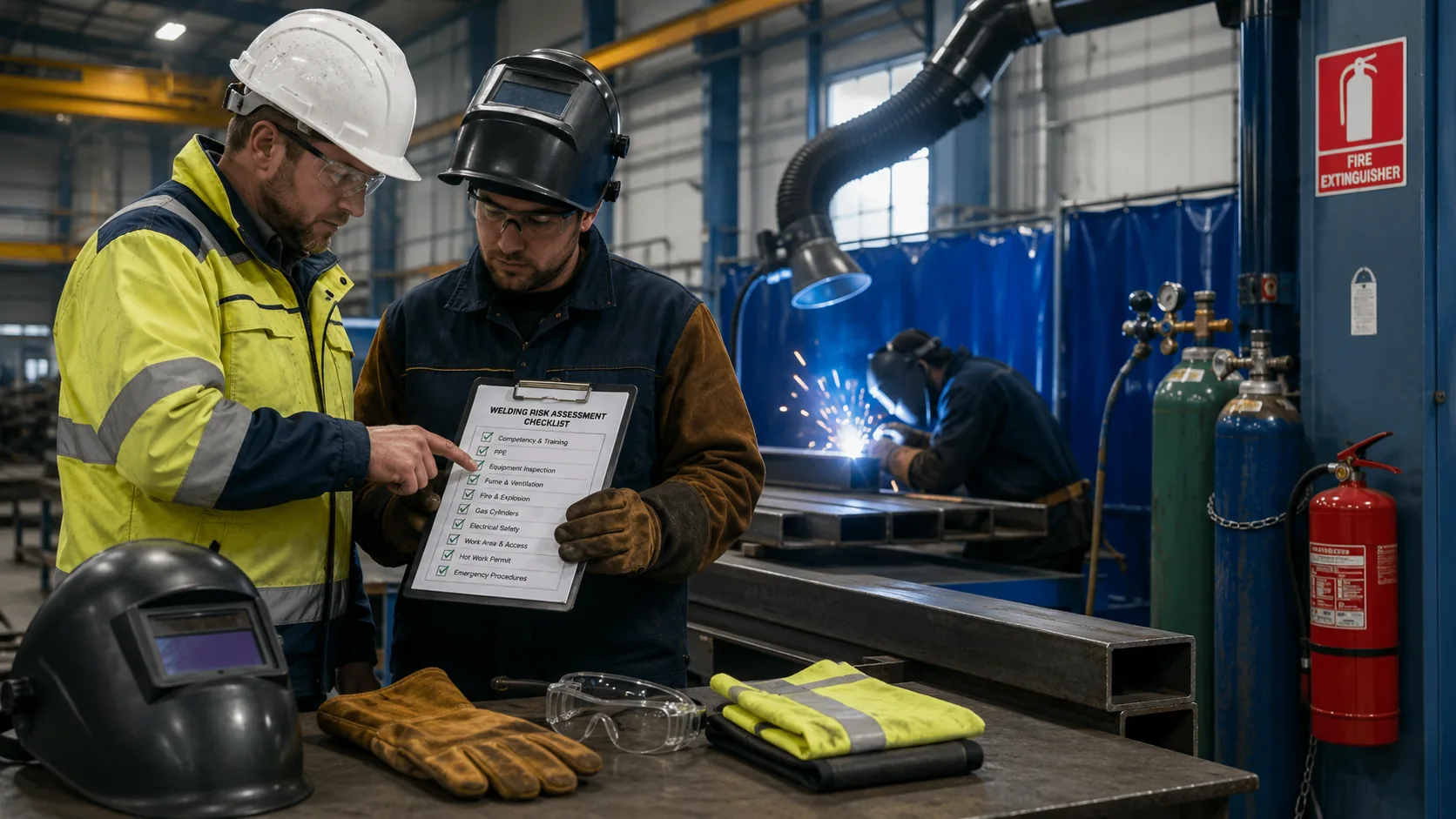
Use the checklist to structure the practical review around fumes, PPE, hot works, equipment, gas cylinders, materials, nearby people and job-specific controls before the final business review.
Use the tool
Select the welding context and generate a structured checklist. Review the output around the actual material, work area, fume control, hot works route, COSHH information, RAMS and method statement before use.
Inputs
Choose the welding context, material condition, fume controls and hot works route. Add job-specific notes before generating the checklist.
Output
This checklist is a starting point. Review it against the real job, RAMS, risk assessment, method statement, COSHH information, permits and site rules before use.
Choose the inputs and select Generate checklist to create a practical welding risk assessment review checklist.
Welding risk assessments support planning and communication. The checks still need competent review before the team relies on them.
The tool creates a structured checklist from preset welding and steelwork prompts. It still needs review around the real job, material, people, equipment and site rules.
Welding risk assessments should not hide fume, gases, coatings, consumables, ventilation, extraction or RPE inside vague generic wording.
The checklist should support the wider RAMS and method statement process. It does not replace competent review, supervision or final business approval.
These official links provide wider context. This Fabora tool does not copy HSE wording and does not create a compliance guarantee.
Official HSE context on welding fume, gases, noise, vibration and other health risks linked to welding.
Official HSE context on fire, explosion, burns, electric shock, compressed gases and other welding safety risks.
Official HSE guidance on welding risk assessment, fume control, ventilation, RPE and protecting nearby workers.
Official HSE welding COSHH guidance for fumes, gases, cutting and related process-generated exposure.
Related Fabora links
Use these guides and tools when the checklist needs to connect with RAMS, method statements, hot works permits, COSHH, fume control or welding cost planning.
Tool FAQ
These answers keep the tool in the right place: useful for practical review, not a replacement for competent assessment.
A welding risk assessment checklist is a structured prompt list for reviewing welding hazards, fume controls, fire risks, PPE, equipment, gas cylinders, COSHH points and job-specific controls before work starts.
No. The tool creates a starting checklist, not a finished legally approved risk assessment. The business must review the output against the real job, RAMS, method statement, COSHH information, permits and site rules.
A welding risk assessment should usually consider welding fume, gases, fire, burns, arc eye, UV exposure, electric shock, gas cylinders, grinding, cutting, noise, vibration, manual handling, slips, trips, nearby people, PPE, COSHH and emergency arrangements.
Check the welding process, material, coating, duration, ventilation, extraction or LEV, RPE needs, nearby workers and whether fume could build up or drift into occupied areas.
Welding PPE may include a suitable welding mask, eye protection, gloves, flame-resistant clothing, safety footwear, hearing protection for grinding or cutting, and RPE where the fume review requires it.
Often, yes. Welding can create fumes and gases, and it can involve consumables, shielding gases, coatings, cleaners or sprays. COSHH review should feed into the wider welding risk assessment and RAMS pack.
Site welding checks should include site rules, induction, hot works permits, access, other trades, public interfaces, fire controls, ventilation, PPE, RPE where needed, gas cylinder control, emergency arrangements and final area checks.
No. The risk assessment identifies hazards, people at risk and controls. The method statement explains the sequence of work. RAMS usually bring the risk assessment and method statement together.
Fabora RAMS helps steelwork teams organise reusable welding hazards, controls, PPE, COSHH items, equipment and method steps inside editable RAMS. It supports drafting and organisation, but it does not replace competent review.